Compare robotic lawn mower products and suppliers against your market position, installation model, sales channel and after-sales capacity. We help importers, distributors and private-label brands assess the product behind the specification before committing to a seasonal order.
Start a Project →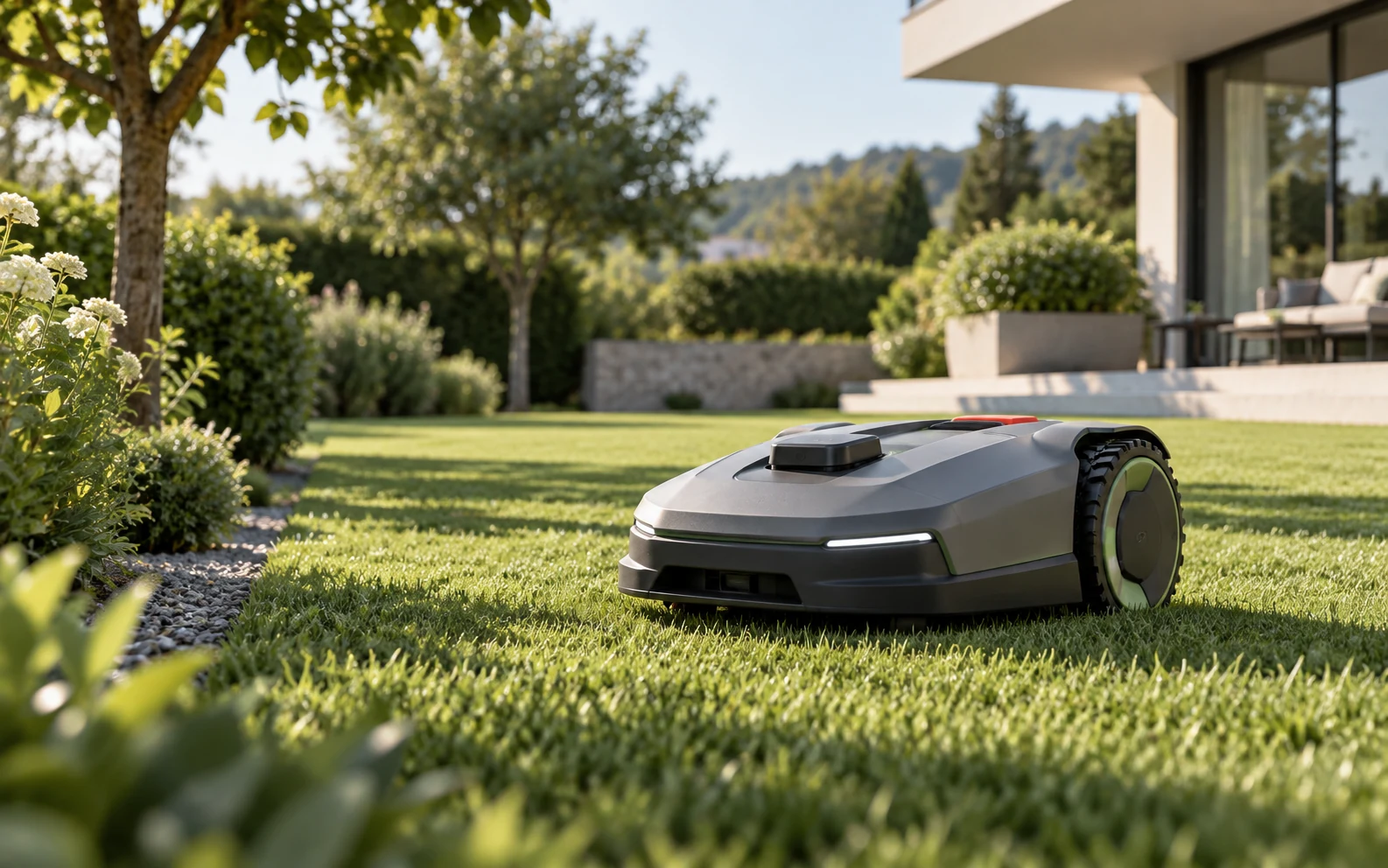
Robotic lawn mowers combine mechanical design, navigation, software, connectivity and outdoor service requirements. Each part can develop at a different speed. A product that looked competitive when the project began may face a different market by the time samples, packaging and production are ready.
That does not mean the newest technology is automatically the right choice. A proven product may fit a dealer network that values predictable installation and service. A newer platform may suit a buyer that can manage software updates, customer education and a faster product cycle.
A technically good product can still become the wrong commercial product. We begin with the market position and sales plan the buyer wants to build, then compare the technology and supplier against it.
The supplier market includes several different starting points.
These teams may be strong in navigation, software and rapid product iteration. The buyer still needs to understand manufacturing control, seasonal capacity, product maturity and how field problems are handled.
These suppliers may bring established manufacturing, product engineering and dealer-channel experience. Their software capability, navigation development and update cycle need to be assessed separately.
Start-ups may move quickly and introduce new positioning or perception systems. Buyers should also examine financing, organisation, production relationships, ownership of the technology and the resources available for long-term support.
No supplier type is automatically better. Every supplier has strengths. The sourcing task is to understand the weaknesses before they become the buyer's problem.
The market does not follow one simple path from old technology to new technology. Physical boundary wire remains relevant in some applications. Wire-free systems may use local RTK, network-based RTK, vision, LiDAR or a combination of positioning and perception technologies.
Each approach changes more than the marketing message:
The decision is therefore not “Which technology is newest?” It is “Which system fits the target gardens, channel capability and expected selling life of the stock?”
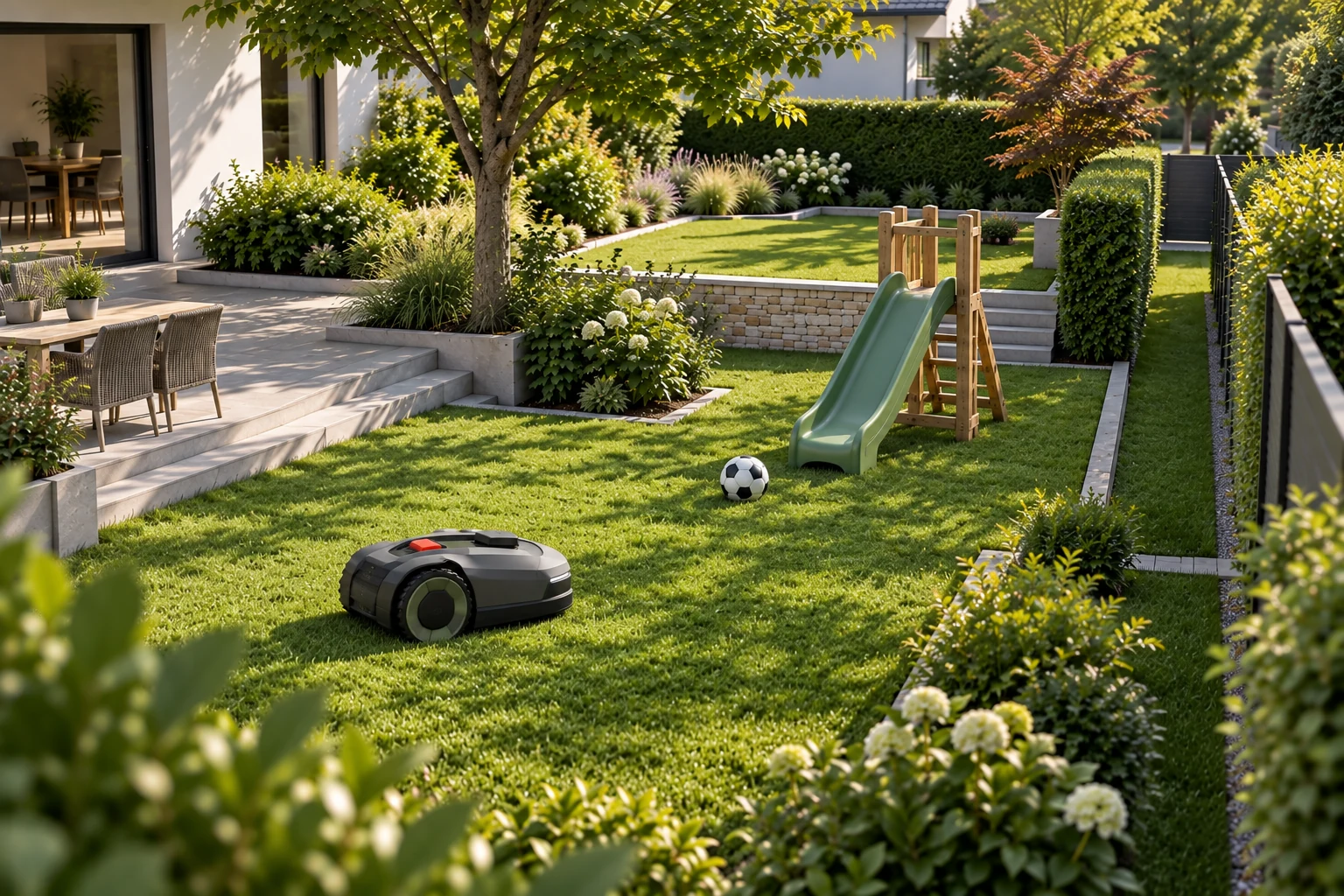
An entry product, a mid-range dealer model and a premium robotic system should not be evaluated in the same way. Lawn size, slope, garden complexity, cutting expectations, installation experience and service level all affect what the product must deliver.
A feature can add value in one channel and add support cost in another. The same is true of automatic mapping, multi-zone control, wireless connectivity, theft protection and advanced obstacle avoidance. We assess whether the feature supports the intended market position and whether the supplier can keep it working after launch.
We compare a proposed robotic lawn mower across six connected areas.
How are boundaries, zones, passages, signal loss and obstacles handled?
Does the mower fit the target lawn size, terrain, slope, cutting pattern and edge conditions?
Who owns and maintains the app, firmware, cloud services and update process?
How mature is the platform, and what changes are expected during the buyer's sales cycle?
Are installation, packaging, manuals, documents and target-market requirements prepared for the proposed configuration?
Are spare parts, diagnosis, repair routes, warranty responsibilities and technical communication clear?
The framework is not a scorecard that makes every product comparable. It identifies which trade-offs matter for the buyer's own project.
The company developing the mower may use a separate factory for production. A factory visit can confirm equipment, assembly and quality processes, but it does not by itself show who controls the software, owns the navigation system, approves product changes or resolves field problems.
We look at how development and manufacturing responsibilities are divided, how the supplier responds to faults and whether the team behind the platform is likely to remain available through the product's selling life.
For a seasonal category, response time matters. A delayed component, unclear diagnosis or unavailable update can affect a full sales window, even when the original production order was delivered.
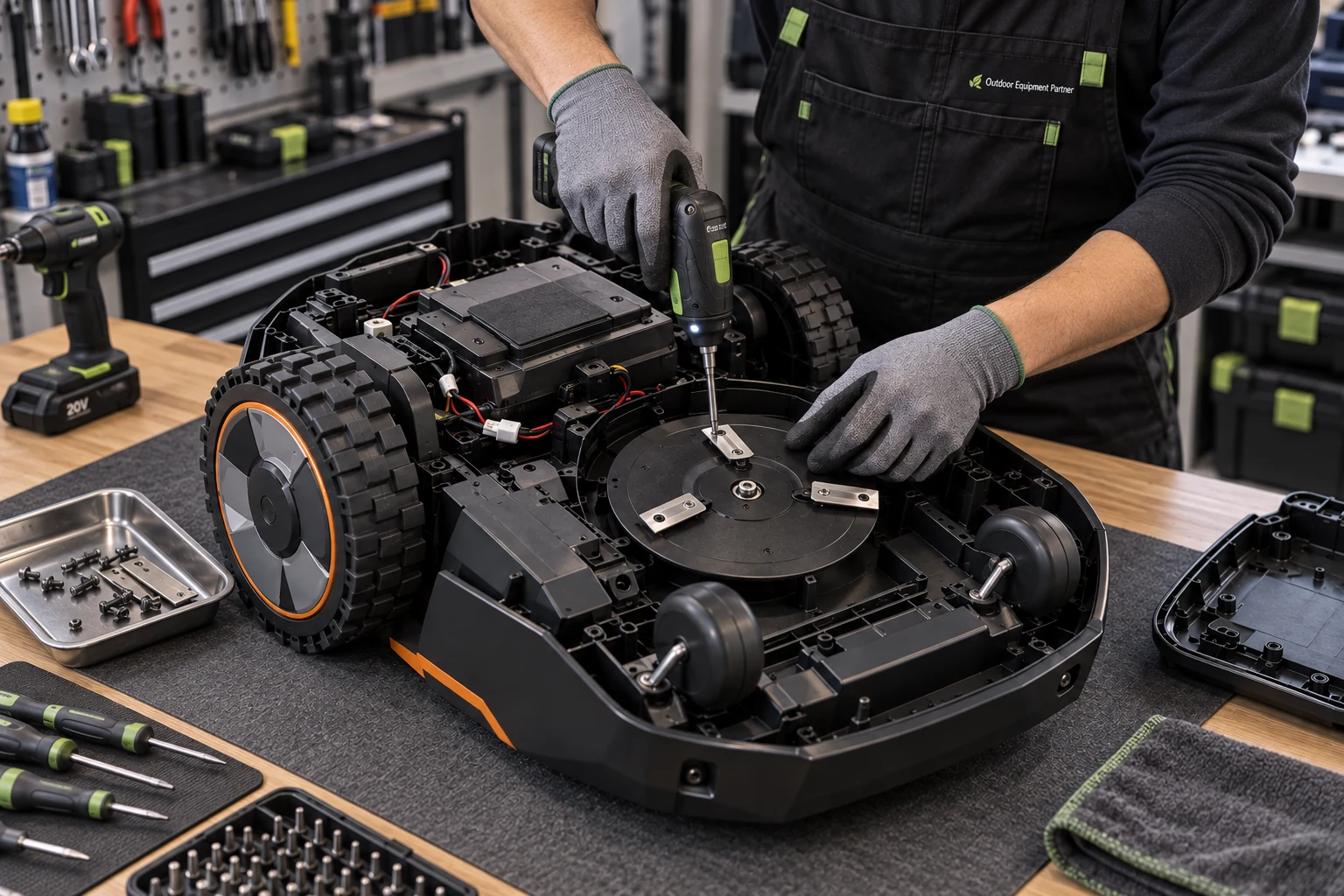
Navigation, mapping, mechanical structure, charging, blade systems, app functions and product appearance may all involve patent or wider intellectual-property questions. A supplier's claim that it owns technology is a starting point, not the end of the review.
Our work can include preliminary FTO and IP screening to identify patents, design rights, trademarks or ownership questions that may require deeper review. It is not a formal legal opinion and does not guarantee freedom to operate.
Explore FTO & IP Screening →The documents available for one model do not automatically cover a different battery, charger, wireless module, firmware version, safety function or private-label configuration. Late changes can create additional testing, labelling and documentation work.
We compare the proposed configuration with the available technical evidence and target-market requirements. Where laboratory testing or specialist interpretation is needed, the scope and responsibility should be agreed before production.
Explore Compliance Support →Small differences in FOB price can be outweighed by returns, replacement units, spare parts, dealer time, technical support and warranty administration. For robotic lawn mowers, after-sales performance is part of the product cost.
Before comparing prices, we want to know which failures can be diagnosed remotely, which modules can be replaced, how quickly parts can move and who supports the app or firmware. We do not publish a universal failure-rate comparison because definitions, markets, product maturity and service policies differ.
Many buyers do not need to develop a robot from zero. A mature platform with agreed branding, packaging and carefully limited configuration changes may provide a clearer first route to market.
Our role is to help the buyer compare suitable platforms, define what should and should not change, coordinate the sample and document questions, and check whether the supplier can support the agreed version through production and after launch.
Changes to hardware, navigation, firmware or the app require a different level of work. They can affect intellectual property, testing, lead time, minimum order quantity and responsibility for future updates. Those decisions should be made before the project is presented as a private-label product ready for sale.
We bring the product, supplier and commercial decision into one assessment. Depending on the agreed project scope, our work can include:
Robotic lawn mowers and robotic pool cleaners share questions about navigation, software, product maturity and after-sales support, but the environments and validation work are different. The Outdoor Robotics Hub helps buyers compare the two product directions without treating them as the same sourcing decision.
Tell us about your target market, customer gardens, sales channel, preferred positioning, private-label needs and required delivery window. We will discuss which products, suppliers and validation steps are worth assessing next.