Compare robotic pool cleaner products and suppliers against the pools, sales channels and after-sales expectations in your market. We help importers, distributors and private-label brands assess more than a specification sheet before an order moves forward.
Start a Project →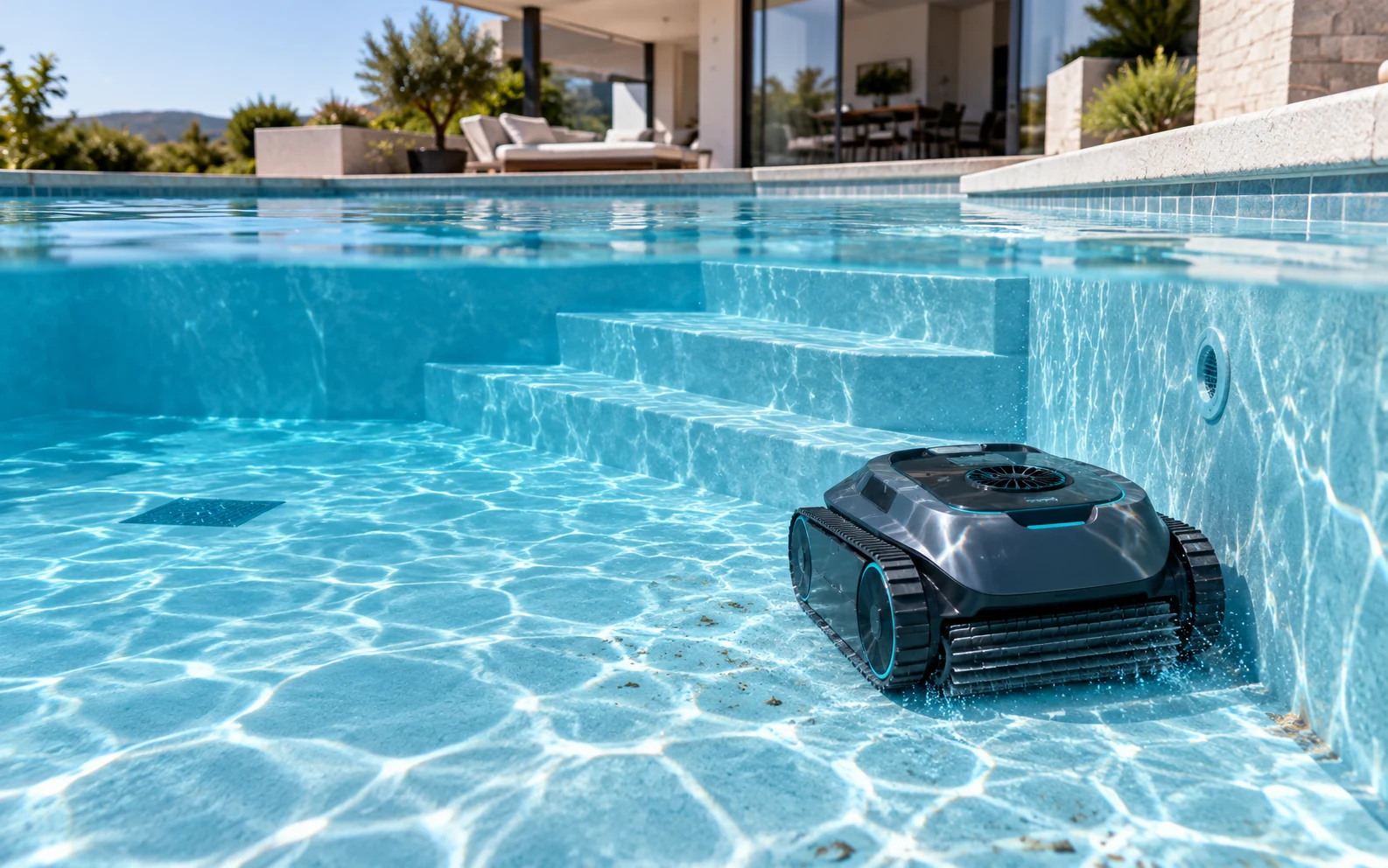
Two robotic pool cleaners may list similar cleaning cycles, filtration features and coverage claims. Their results can still differ when they meet different pool shapes, surfaces, wall transitions and debris conditions.
The difference is not only in the hardware. Sensor layout, movement logic, software, mechanical tolerances and the supplier's field experience all affect how the product behaves outside a demonstration pool.
We therefore compare the robot as a complete product platform: where it is expected to work, how it has been tested, how mature the design is and how the supplier responds when problems appear after launch.
Pool size is only the beginning. Shape, depth, slopes, bottom structure, steps, ledges, wall transitions and surface materials can all change traction, climbing and coverage.
These conditions also vary between countries and customer groups. A model that performs well in one regular test pool may behave differently in an irregular residential pool or on another surface.
The pool is part of the navigation system. Before comparing models, we define the target pool environment and the cleaning tasks the buyer expects the product to complete.
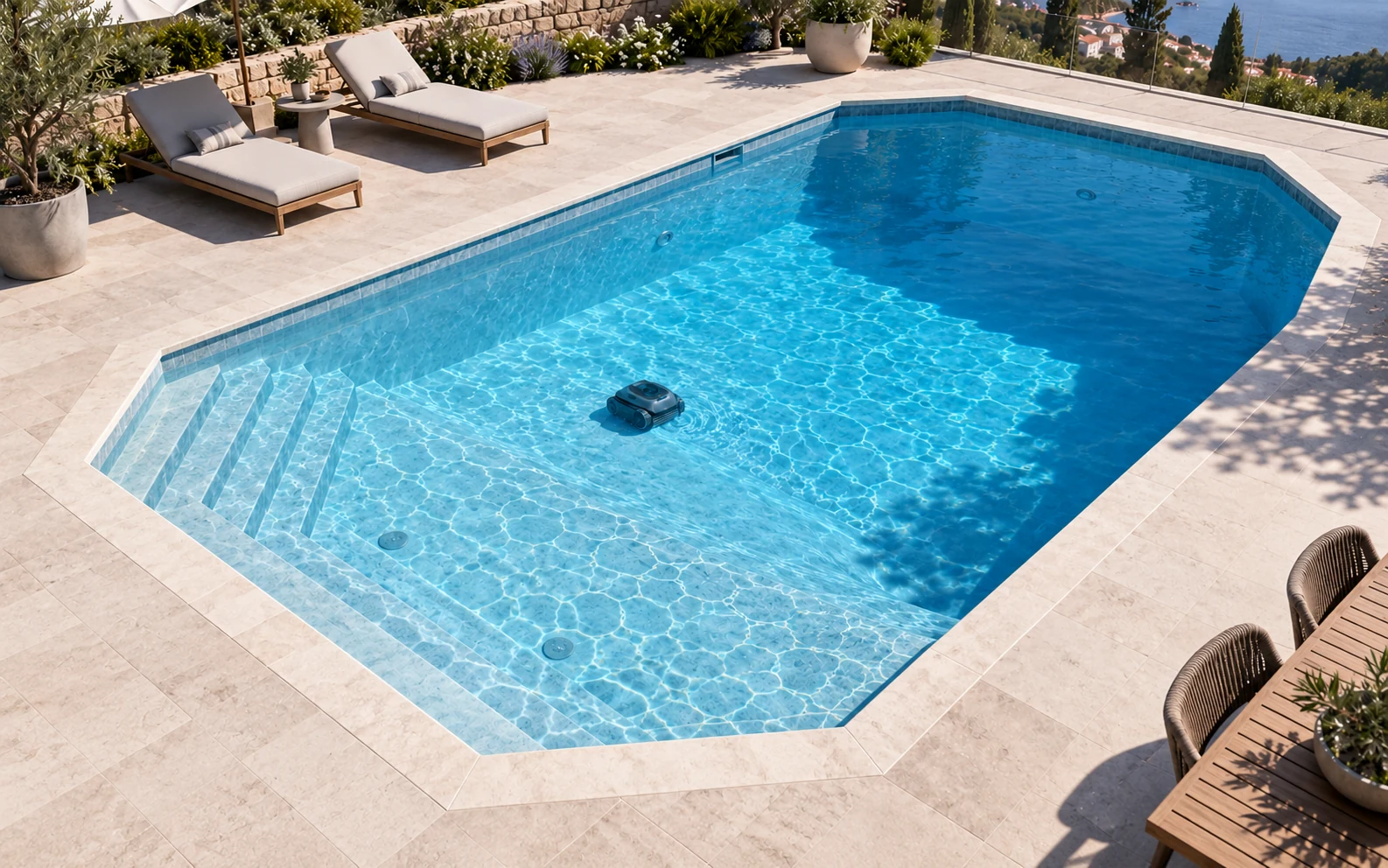
Some buyers need floor cleaning only. Others expect wall and waterline cleaning, fine-particle filtration, leaf collection or a particular operating time. Each additional expectation changes what should be checked in the sample and what the sales channel will need to explain to customers.
We assess the proposed product through eight connected questions.
Which pool sizes, shapes, surfaces and transitions should it handle?
Which debris and cleaning areas matter most?
How does the robot move, recover and reduce missed areas?
How do traction, climbing, drive components and sealing behave?
Is the filter arrangement suitable for the expected debris and maintenance routine?
What is known beyond the first sample cycle?
Are spare parts, diagnosis and warranty responsibilities clear?
Does the supplier's operating model fit the buyer's channel and private-label plan?
Navigation is not only a technical feature. It affects repeat cleaning, missed areas, cycle time and what customers see when they compare the result with the product promise.
Different suppliers use different combinations of sensors, movement rules and coverage algorithms. No realistic test programme can reproduce every pool in a market, so we look at how the supplier developed and tested the navigation system, which conditions it has covered and how software issues are handled after shipment.
This is also why a video from one successful pool is useful evidence, but not a complete product assessment.
A buyer can learn a great deal by testing one unit for two to four weeks. Basic cleaning, charging, handling, app functions and visible faults can all be checked. What that test cannot show is performance across the full range of customer pools or failures that develop after longer use.
A successful sample test is evidence. It is not proof of long-term market performance.
Our assessment combines sample performance with the supplier's testing capability, field history, after-sales data and the target pool environment. When the evidence is limited, we state what is still unknown instead of turning one good test into a broad claim.
Robotic pool cleaners work with motors, moving components and seals in a wet environment. Over time, vibration, sealing fatigue, tolerances and material ageing can affect waterproof integrity.
For a B2B buyer, product maturity therefore includes both the physical design and the supplier's ability to identify patterns, update the product and provide a practical response.
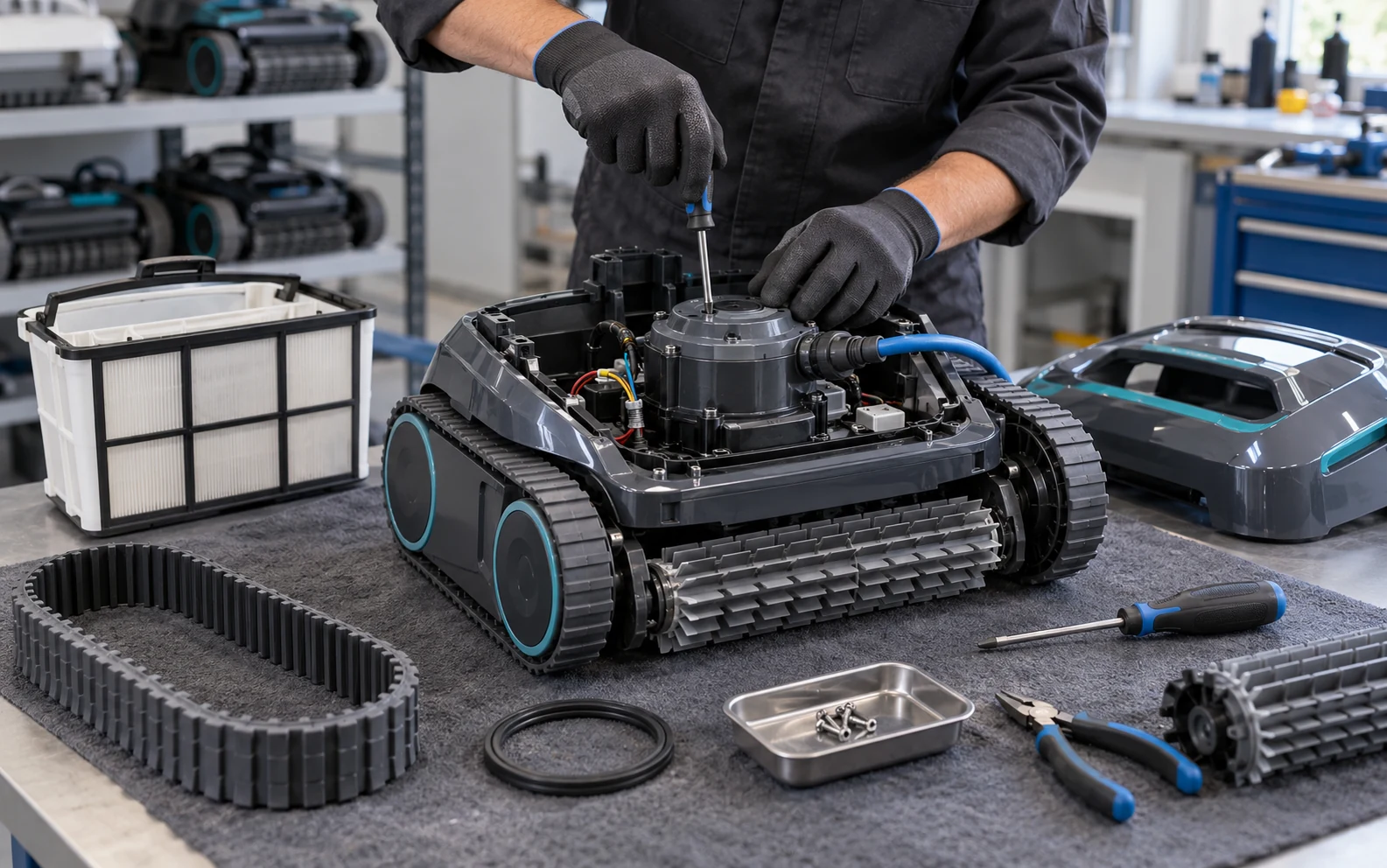
FOB price does not show the full commercial cost. Returns, spare parts, technical support, warranty handling, software updates and dealer time can change the economics of the product after launch.
We evaluate total product cost, not FOB price alone.
Before an order, we discuss which parts can be replaced, how faults will be diagnosed, what information the supplier will provide and which responsibilities sit with the buyer, dealer or service partner. A lower purchase price is not a saving if the channel cannot support the product.
Some robotic pool cleaner companies focus on their own brand. Others are organised for OEM or ODM work, while some try to serve both models. This affects customisation, channel protection, software support, pricing and long-term cooperation.
A supplier with a strong branded product may have limited interest in adapting it for another brand or protecting a buyer's channel. An OEM-focused supplier may be more flexible but have a different level of product maturity, software ownership or field data.
A strong manufacturer is not automatically the right OEM partner. We look at who owns the product development, who controls production changes and who will continue supporting the platform after shipment.
Private label does not always require a new robot. For many first projects, a mature existing platform with agreed branding, packaging and market-specific adjustments can reduce development work and make the validation scope clearer.
Hardware, firmware or app changes require a different discussion. They may affect testing, documentation, lead time, minimum order quantity and responsibility for later updates.
An online seller, a specialist pool dealer and a broad distributor do not carry the same service capability. The right product depends on who explains installation and use, who handles faults, whether spare parts can be stocked and how quickly seasonal complaints must be resolved.
The best manufacturer is not necessarily the best supplier for every buyer. We compare the product and cooperation model with the market position and support capacity the buyer wants to build.
Compliance documents need to relate to the model and configuration the buyer plans to sell. A report for a similar robot does not automatically cover changes to the charger, battery, wireless functions, materials or software. We identify the available evidence and the questions that may need a qualified laboratory or specialist.
Explore Compliance Support →Product appearance, mechanical solutions, navigation methods and accessories may also raise patent or wider IP questions. Our work can include preliminary FTO and IP screening to identify issues for further review; it is not a formal legal opinion or a guarantee of freedom to operate.
Explore FTO & IP Screening →A robotic pool cleaner may sit alongside salt chlorination, pool lighting and selected circulation products in the same distribution portfolio. Each category still needs its own supplier and risk assessment, but the broader view can help with range planning and purchasing priorities.
Tell us about your target market, customer pools, sales channel, private-label needs and required delivery window. We will discuss which products, suppliers and validation steps are worth assessing next.