How to Evaluate a Chinese Robotic Pool Cleaner Manufacturer
Most buyers open with a request for the price list. That is the wrong place to start. A price list tells you what the supplier wants to sell you. It does not tell you whether the product will last past its second season. In robotic pool cleaners, the gap between a $200 unit and a $600 unit is rarely in the motor. It shows up in the seal, the firmware, and whether anyone will still answer your emails after the container has left the port.
This guide is for importers, brand owners, and distributors sourcing robotic pool cleaners from China who want a working method rather than a list of factory names. If you only need the top-line sourcing process, see our Sourcing Services. If you already have a shortlist, jump to the supplier-evaluation checklist at the end.
1. Know who you are actually talking to
"Manufacturer" is a loose word in this industry. At least three different kinds of businesses will answer to it.
The first is the assembly factory. They buy motors, pumps, PCBs, and shells from other plants and put the machine together. They are fast and cheap. They also depend on their upstream suppliers for firmware, spare parts, and any design change.
The second is the OEM. They own the tooling, the firmware, and the mechanical design. They build on their own platform and adapt it to your branding.
The third is the brand owner. They own the product definition and the IP but outsource the actual production. Some of them still call themselves manufacturers in their marketing.
A single question usually sorts them out: "Do you own the injection molds for the chassis and the source code for the navigation firmware?" Either the answer is yes to both, or the person on the call can explain clearly who does.
Most assembly factories sit at the bottom of the margin stack. Their gross margin typically lands between 6% and 12% of BOM cost, and the bigger the order, the more leverage the brand owner has at the table. After labor, what is left for the factory is thin. When a brand owner and a contract manufacturer work under a consignment model, the factory gets visibility into every hardware supplier behind the product. In principle, and setting aside IP questions, that is enough to clone the whole line, change the shell, and sell it. What stops most of them is not the IP risk by itself. It is that they do not have the source code, so they cannot push a firmware update to a pool cleaning robot that has already been sold. The brand or the R&D team, by comparison, usually runs an OTA cadence every three to eight weeks to fix the things users actually run into.
2. Nail down product ownership and IP
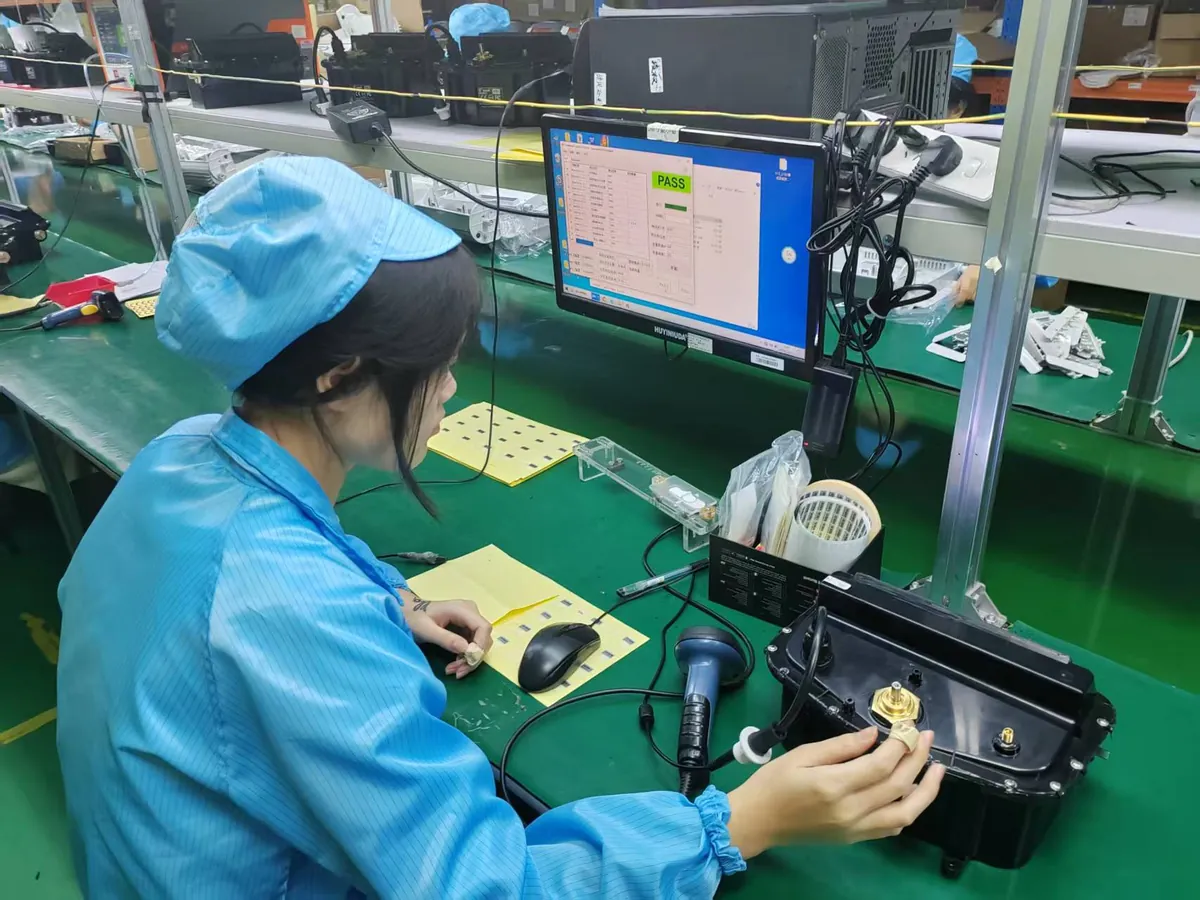
A supplier that cannot explain who owns the product design will not be able to help you when a competitor shows up six months later with the same machine. Before you commit, ask for four things.
Whose name is on the tooling. Who wrote the firmware, and whether it is in-house, licensed, or a third-party module. Any utility model, design patent, or PCT filing (WIPO, Patent Cooperation Treaty) that sits on the platform. And a written statement of what happens to the tooling if the relationship ends.
WIPO describes the PCT as a filing route that “makes it possible to seek patent protection for an invention simultaneously in each of a large number of countries”.
None of this is legal advice. It is the minimum you need before making a sourcing decision. For a formal prior-art and design-risk review, see FTO & IP Screening.
3. Ask how they test, not what they claim
A pool cleaning robot that cleans a flat, rectangular, plaster-lined demo pool tells you almost nothing. Real pools have slope changes, vinyl wrinkles, waterline tile, main drains, and shapes that do not fit any clean category.
Ask which pool geometries their standard test protocol covers. Ask whether they test on vinyl, plaster, and tile. Ask what the navigation logic does on a sloped floor and at a vertical wall transition. Ask what happens when the robot loses traction on a step or a ledge.
If the answer is "our robot handles all pool types," ask for the test report. If there is no test report, treat the claim the way you would treat any other marketing line.
4. Push on the seal
Water ingress is the most common cause of premature failure in a pool cleaning robot, and it is also the easiest thing for a factory to skip when the sales cycle is short.
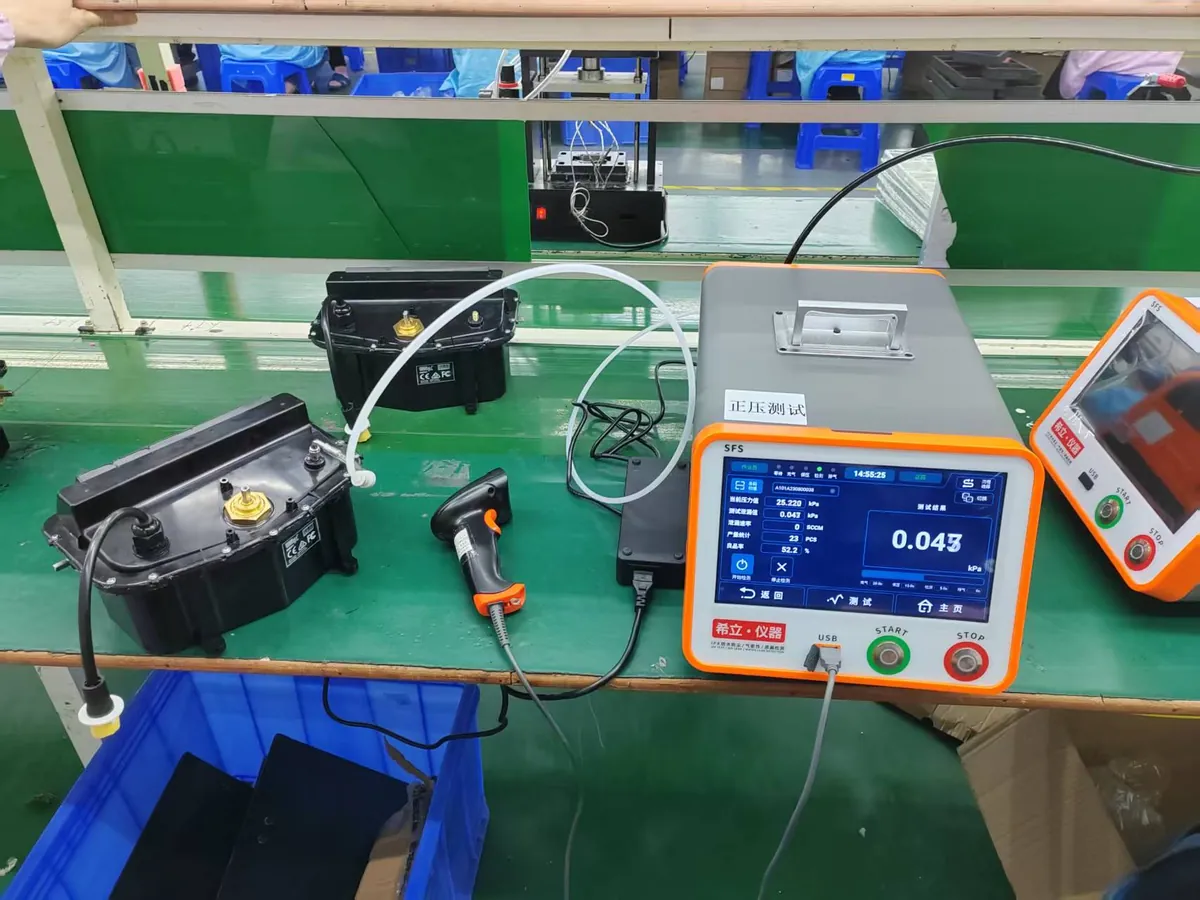
What IP rating is the motor housing tested to. Does the sealing design have a documented life-cycle test, and if so, how many hours submerged and how many thermal cycles. What is the field failure rate on the current platform and how is it measured. Has the seal design changed between the last two production batches.
If the supplier cannot answer these with data, treat the seal as a weak point until proven otherwise.
5. Look at the after-sales model
The most expensive part of a pool robot is not the machine. It is the customer who cannot get a replacement motor, brush, or filter basket in month fourteen.
Which spare parts are sold as separate SKUs. What the typical lead time is for those parts, because that matters more than the lead time on the robot itself. Whether firmware updates go out over the air, over a cable, or not at all. And what documentation the factory provides for end-user troubleshooting.
For compliance documents and market-specific requirements, see Compliance Support.
6. Check the technical file before you import
Depending on the target market, the pool cleaner may need CE marking in the EU, FCC in the US, or the local equivalent.
Ask for a Declaration of Conformity that names the exact model you are buying, not a family name. Ask for test reports that match the model number on the DoC. Ask for UN 38.3 (UNECE, Manual of Tests and Criteria) battery transport documentation if the unit is cordless. Ask whether the factory has been audited by a third party and to what standard.
A DoC that covers "the X series" is not the same document as a DoC for the specific model on your purchase order. If the model number does not line up, the certificate will not survive customs. The priorities differ by market as well. EU buyers should confirm the Responsible Person and technical file. US buyers should check FCC and battery transport documentation. Australian buyers should verify the water-ingress durability claim against the conditions the unit will actually see.
7. Bring this checklist to the call
- Do you own the molds and the firmware?
- Can you show a test protocol that includes slope, waterline, and irregular shapes?
- What is the IP rating of the motor housing, and how was it tested?
- What is your field failure rate on the current platform?
- Which spare parts are sold as separate SKUs, and at what lead time?
- Can you supply a DoC that names the exact model?
- Can you supply UN 38.3 documentation for cordless models?
- Who owns the tooling if we stop working together?
A supplier that answers all eight is worth a second meeting. A supplier that dodges more than two is not.
Work with people who vet the factory, not just the quote
ROBOMISE helps importers and brand owners source outdoor equipment from China. Supplier verification, compliance support, and FTO/IP screening are built into the process. If you are evaluating robotic pool cleaner manufacturers for the EU, the US, or Australia, we can help you separate the assemblers from the manufacturers and the test data from the marketing claims.
Start a Project, or see our Robotic Pool Cleaner sourcing page.